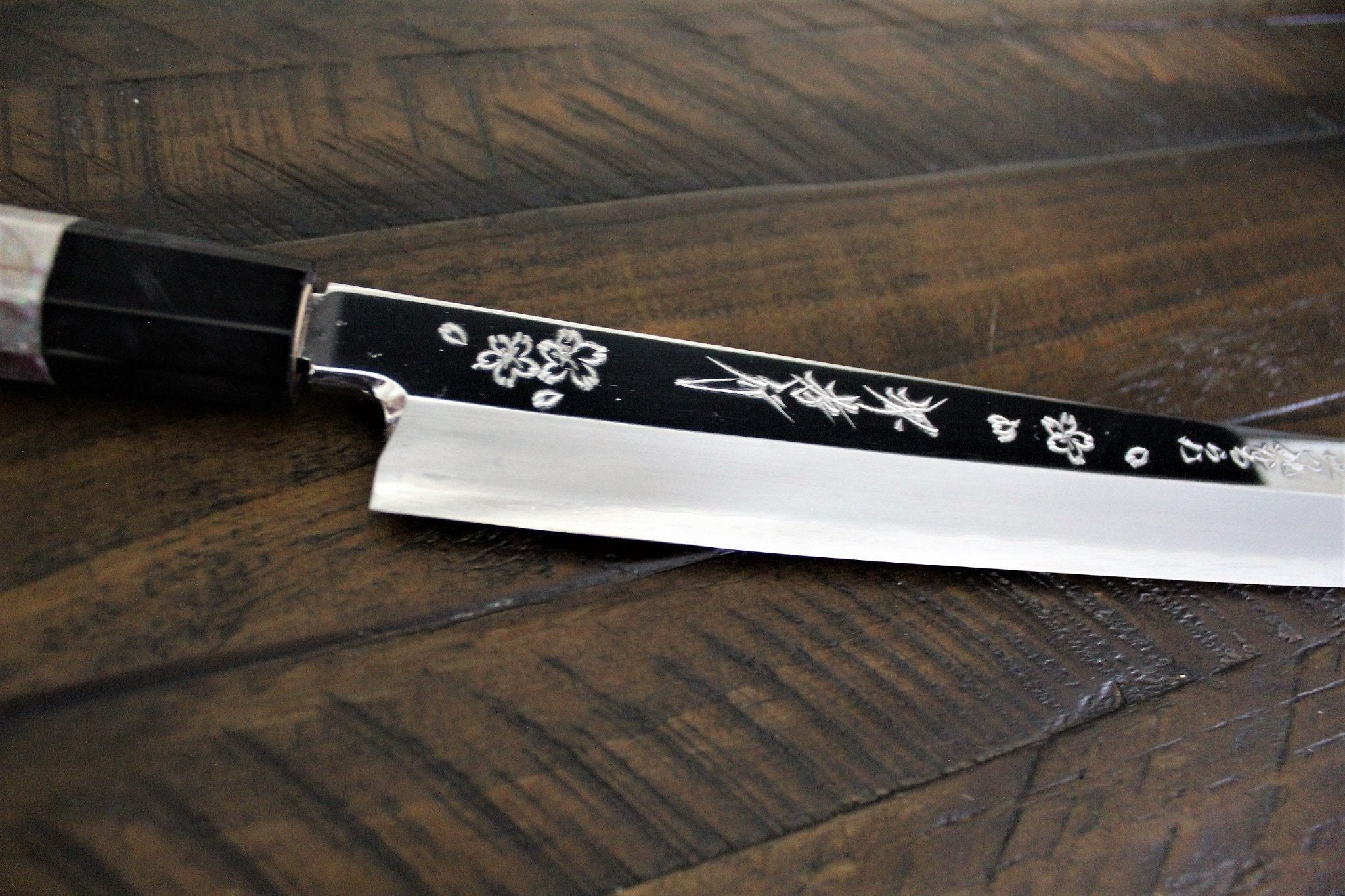
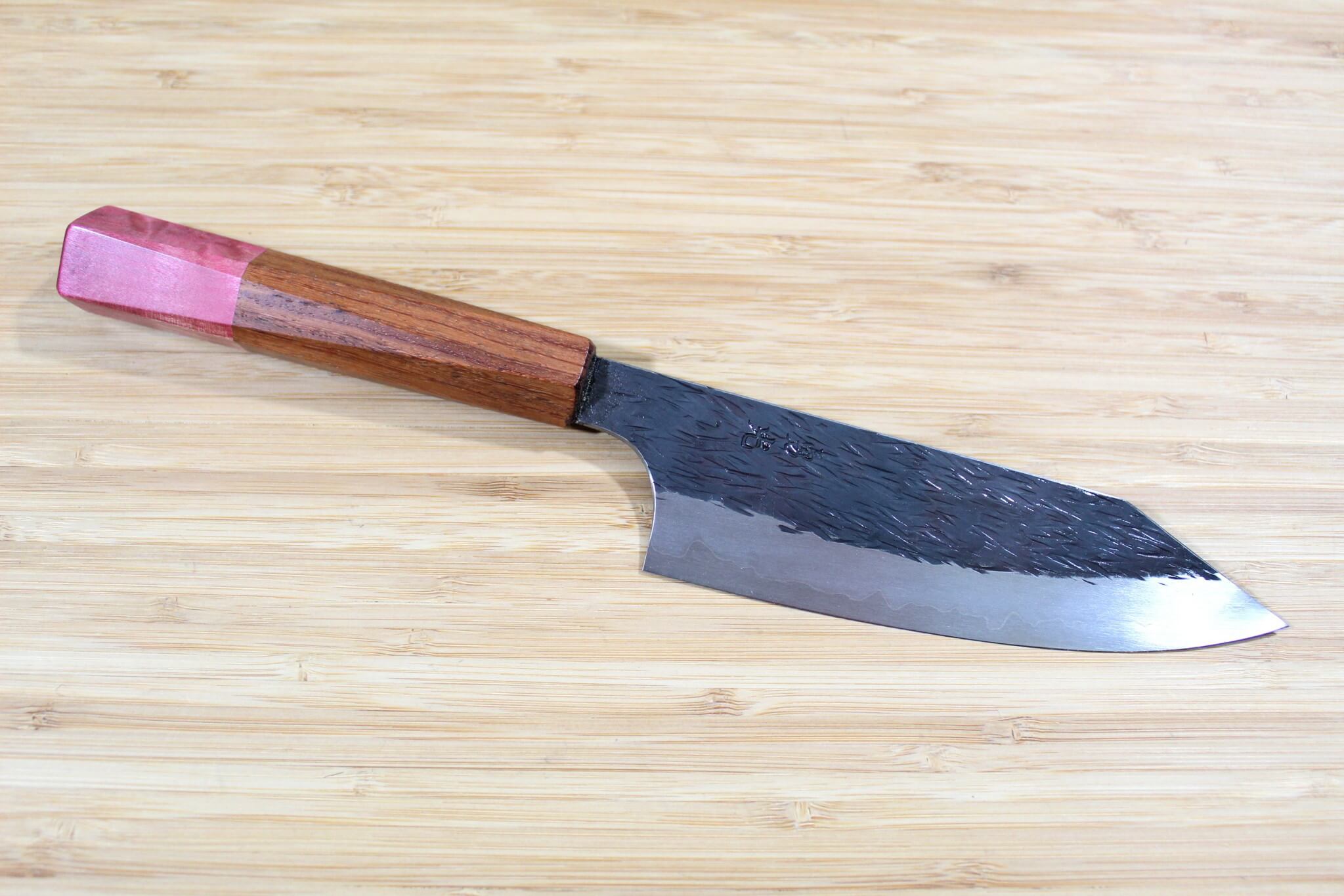
Isamitsu Knives: A New Generation of Japanese Blades Trained Under Teruyasu Fujiwara
In the world of Japanese knifemaking, lineage matters. Few credentials carry more weight than being trained under Teruyasu Fujiwara, a blacksmith revered for uncompromising standards and fiercely traditional forging methods.
Isamitsu belongs to a rare generation of modern Japanese knife makers who endured that discipline—and emerged with a voice of their own.
Isamitsu knives are not replicas of the past. They are a continuation—handforged Japanese chef knives shaped by classical apprenticeship and refined for contemporary kitchens.
Who Is Isamitsu? A Modern Blacksmith Rooted in Tradition
Isamitsu represents a new wave of artisan knife craftsmanship: independent, technically rigorous, and deeply respectful of lineage. After years of intensive training under Teruyasu Fujiwara, Isamitsu stepped out not to imitate—but to interpret.
Unlike factory-scale production, Isamitsu works in small batches, forging, grinding, and finishing blades with hands-on precision. Every knife reflects personal accountability—steel selection, heat treatment, and geometry are executed by the same maker from start to finish.
This continuity is increasingly rare—and increasingly valued.
Training Under Teruyasu Fujiwara: A Forging Pedigree Few Achieve
What Makes Fujiwara’s Apprenticeship Unique
Training under Teruyasu Fujiwara is widely known to be among the most demanding paths in Japanese knifemaking. Apprentices are expected to master:
- Traditional forging by hand
- Exacting heat treatment discipline
- Extreme attention to blade geometry
- Acceptance of harsh critique as a learning tool
Many do not finish. Those who do carry technical fluency that cannot be rushed or outsourced.
Skills Passed Down Through Discipline
Isamitsu’s time under Fujiwara instilled more than technique—it forged judgment. Understanding when to thin a blade, how to control hardness without brittleness, and why subtle geometry choices matter in real kitchens defines the difference between decorative knives and professional tools.
What Defines Isamitsu Knives
Steel Selection & Heat Treatment
Isamitsu knives emphasize performance-forward steel choices, often favoring high-carbon formulations prized for:
- Exceptional edge retention
- Refined sharpening feedback
- Aggressive, clean cutting feel
Heat treatment is conservative but deliberate—prioritizing usable hardness over fragile extremes.
Grind, Geometry, and Cutting Feel
Where Isamitsu truly stands apart is geometry. These handmade Japanese chef knives are designed to:
- Enter food cleanly
- Release ingredients efficiently
- Maintain stability across varied cutting styles
This makes them equally compelling for:
- Professional chefs in high-volume kitchens
- Enthusiasts who value tactile feedback and precision
Why Isamitsu Represents the Future of Japanese Knifemaking
Modern Japanese knife makers face a challenge: preserve tradition without freezing it in time.
Isamitsu meets this challenge by:
- Honoring classical forging discipline
- Adapting blade profiles for modern prep styles
- Maintaining small-batch integrity in a global market
This balance ensures that tradition remains alive, not ceremonial.
Who Should Choose Isamitsu Knives?
Isamitsu knives are ideal for:
- Professional chefs seeking expressive, reliable tools
- Knife enthusiasts who value lineage and individuality
- Collectors looking for emerging artisans with lasting relevance
These are not entry-level knives. They are tools for cooks who understand that performance is shaped by the hands behind the blade.
Collecting and Caring for Isamitsu Knives
To preserve performance:
- Hand wash and dry immediately
- Use soft wood or rubber cutting boards
- Sharpen on quality whetstones
- Store with edge protection
Proper care allows Isamitsu knives to evolve—developing patina, character, and improved cutting feel over time.
Why We Curate Isamitsu at Hasu-Seizo
At Hasu-Seizo, we curate artisans whose work reflects both technical mastery and personal integrity. Isamitsu knives align seamlessly with our mission:
- Authentic apprenticeship lineage
- Small-batch, hand-forged production
- Performance validated by real kitchens
By introducing Isamitsu to our collection, we invite customers to engage with the next chapter of Japanese knifemaking.