


Kyokokaji Shokei Shironiko Kurouchi Petty / Paring 80 mm (3.1") Fujimaki Handle
Rigid Precision for Intricate In-Hand & Detail Prep
Standard paring knives often suffer from thin, flexible blades that bend under pressure when coring dense apples, hulling strawberries, or trimming tough silverskin. Conversely, full-sized chef knives feel oversized and clumsy for delicate off-the-board tasks.
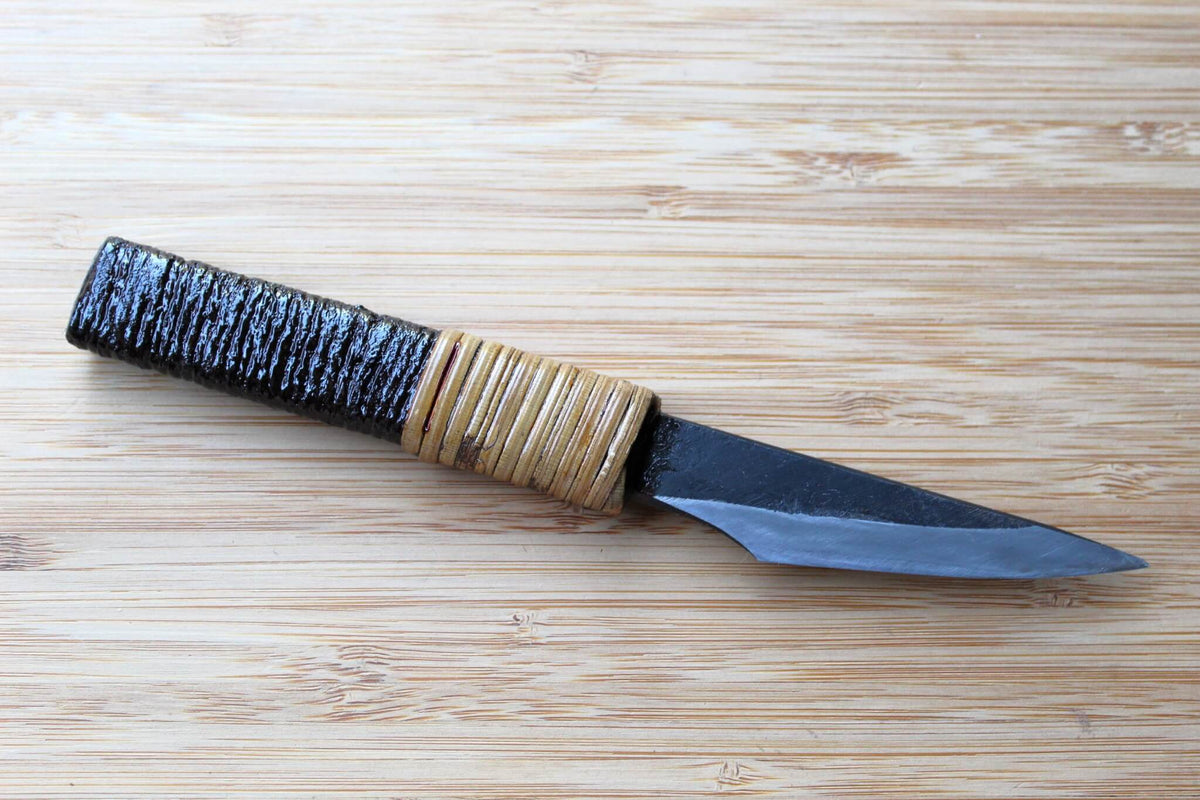
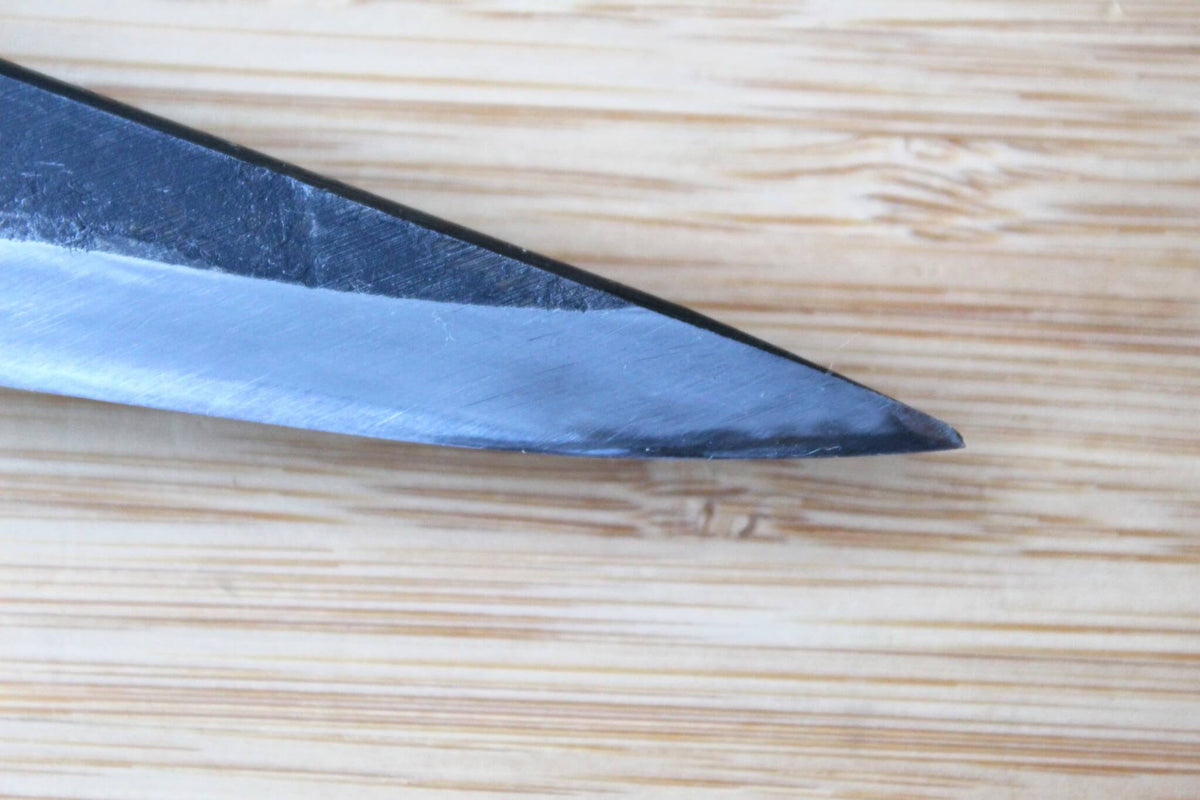
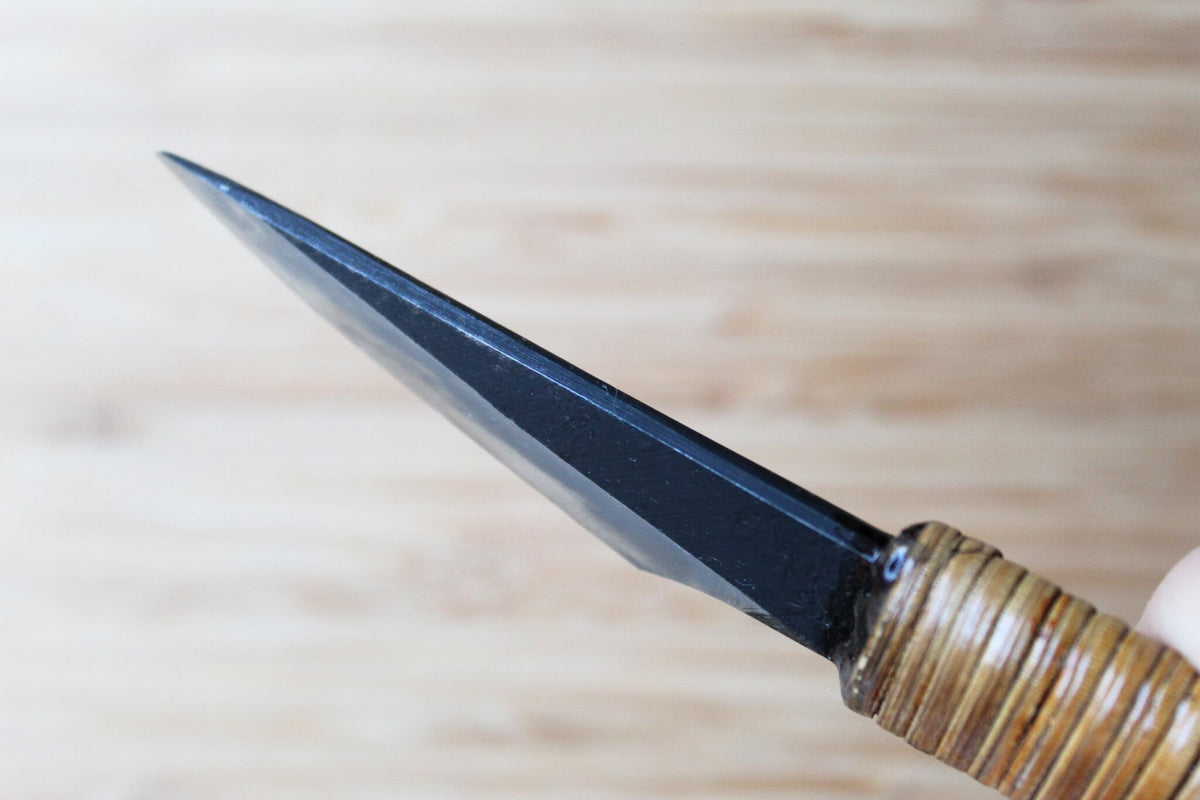
The Kyokokaji Shokei Shironiko Kurouchi Petty / Paring 80 mm bridges this gap with purposeful geometry. Measuring 80 mm (3.1") along the cutting edge and weighing a balanced 60 grams, it sits comfortably inside the palm for pinpoint tip control. Forged with a sturdy 3 mm spine at the heel that tapers sharply down to a razor-thin edge, the blade eliminates unwanted flex during paring and coring while slicing cleanly through delicate skins and garnishes.
Shironiko (Shirogami #2 / White Steel #2): Pure High-Carbon Bite
Named Shironiko —the traditional Japanese blacksmith designation for Hitachi Shirogami #2 (White Steel #2)—the cutting core is hardened to 61–63 HRC. Stripped of complex alloy carbides, White Steel #2 represents Japanese carbon metallurgy in its purest form:
- Hair-Splitting Edge Acuity: Takes an extraordinarily fine, keen apex capable of surgical detail cuts without tearing delicate fruit or herb cells.
- Effortless Whetstone Feedback: Sharpens and deburrs faster and cleaner on Japanese whetstones than virtually any stainless or high-alloy tool steel.
Traditional Iron-Clad Forging (Awase) & Kurouchi Finish
Unlike modern blades wrapped in stainless steel, this knife is forged using the authentic Japanese Awase (San Mai) method: a hard Shirogami #2 cutting core (hagane) forge-welded between two layers of softer, shock-absorbing iron (jigane):
- Structural Resilience: Soft iron cladding cushions the ultra-hard 61–63 HRC carbon core against lateral shock, reducing the risk of snapping or brittle fracture during demanding prep.
- Superior Whetstone Thinning: Soft iron abrades smoothly and quickly against Japanese whetstones, making routine edge maintenance and future blade thinning significantly easier than with tough stainless cladding.
- Authentic Kasumi Contrast: Over time, whetstone sharpening brings out a classic, misty kasumi haze on the soft iron bevels that contrasts against the mirror-bright Shirogami #2 cutting edge.
High Carbon & Iron Care: Patina as Protection
Because both the soft iron cladding and the Shirogami #2 cutting core are reactive carbon metals, this entire blade is non-stainless and requires simple, mindful care:
- Protective Kurouchi Scale: The upper blade flats retain their authentic Kurouchi (unpolished blacksmith forge) finish. This dark, textured oxide layer shields the upper iron flats from moisture while giving each blade a rustic, hand-forged character.
- Patina as Natural Armor: Both the exposed soft iron along the bevel and the Shirogami #2 edge will react naturally with acidic foods like citrus, apples, and shallots, forming a safe, blue-gray to warm-amber patina. Experienced Japanese knife users prize this patina because it acts as a natural barrier against damaging red rust.
- Simple 2-Step Carbon Care:
- Wipe the blade dry with a clean kitchen towel immediately after slicing acidic produce.
- Hand-wash with warm water and mild soap right after use, dry thoroughly, and store dry. Apply a light coat of food-safe Camellia or mineral oil before extended storage. Never clean in a dishwasher.
Traditional Fujimaki (Rattan-Wrapped) Half-Tang Handle
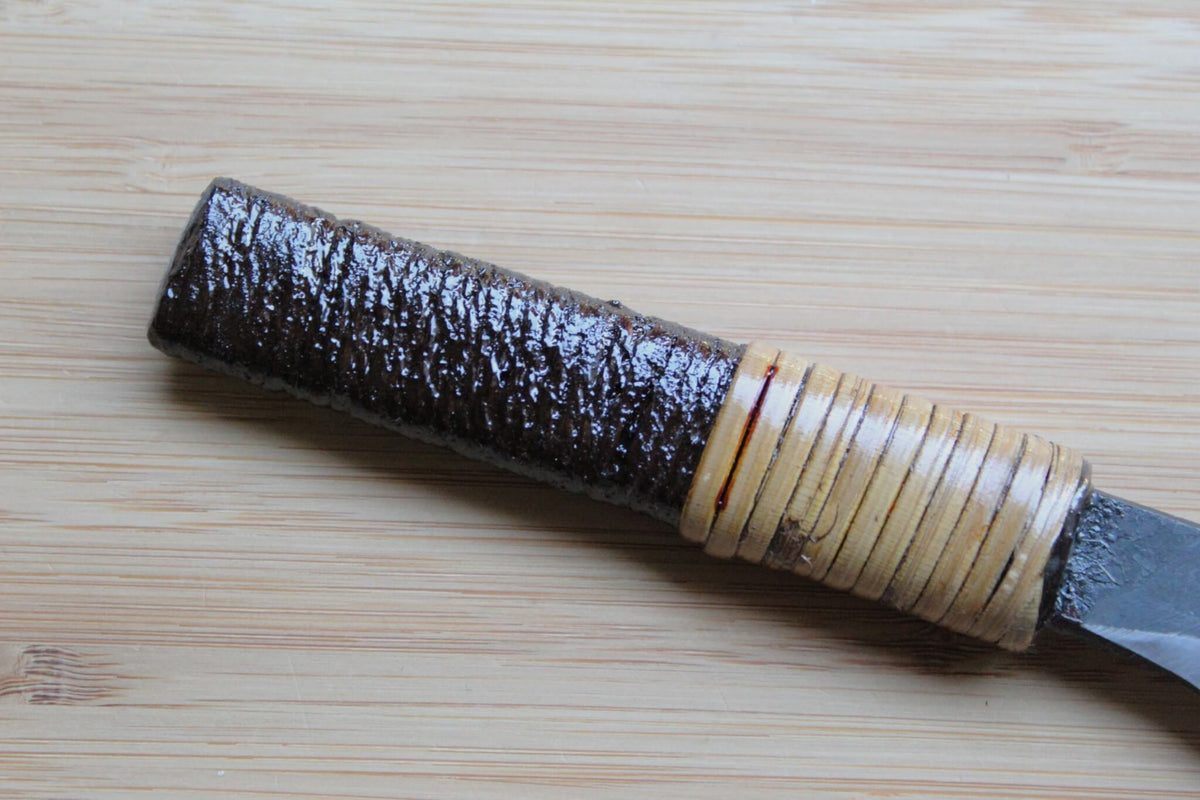
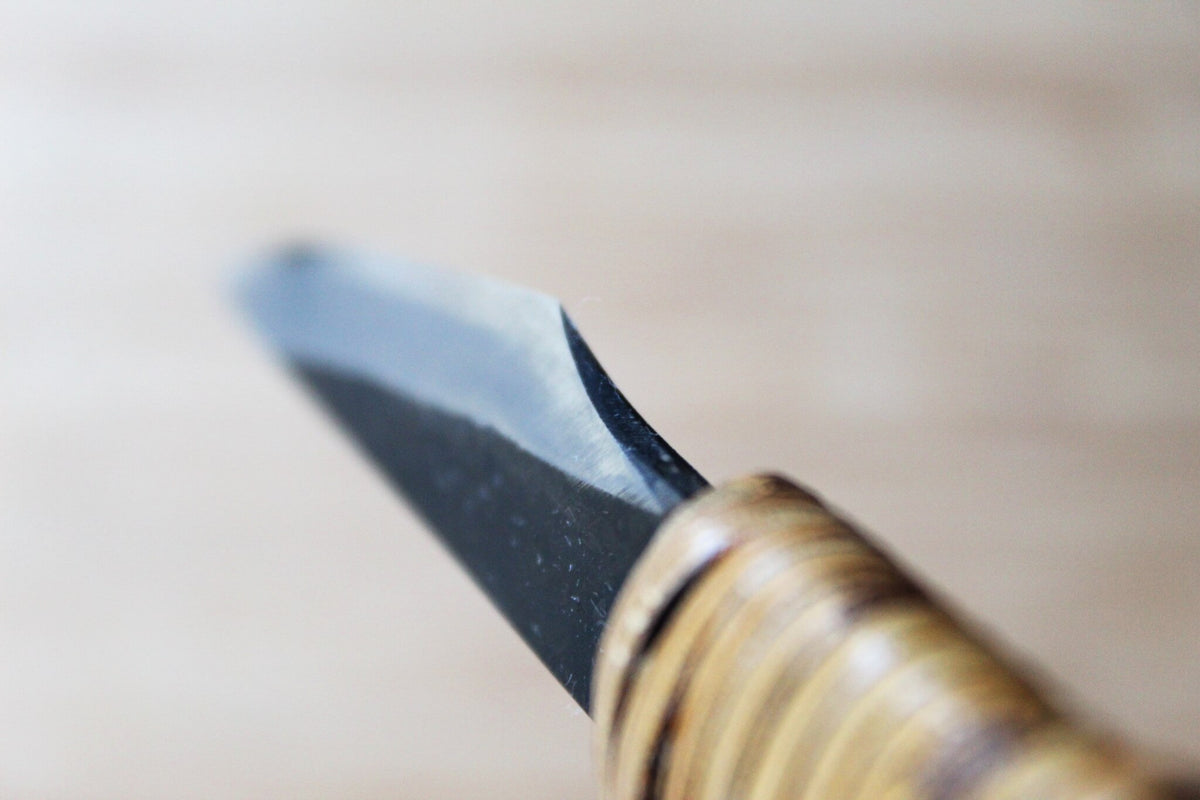
Mounted to the half-tang blade is a traditional Japanese Fujimaki handle, tightly bound in natural Japanese wisteria rattan (to). Used for centuries on fine Japanese woodworking chisels and artisan cutlery, rattan provides a textured, organic grip that remains completely slip-resistant even when your hands are wet with fruit juices. Its compact 90 mm length and 20 mm thickness nest securely in the palm for fatigue-free detail work.
Technical Specifications
|
Specification |
Details |
|
Brand / Maker |
Kyokokaji Shokei |
|
Knife Type |
Petty / Paring Knife |
|
Blade Construction |
Traditional Japanese Awase / San Mai (High-Carbon Core Clad in Soft Iron) |
|
Core Cutting Steel |
Shirogami #2 / White Steel #2 (Shironiko) High-Carbon Steel |
|
Hardness |
61–63 HRC |
|
Blade Finish |
Kurouchi (Traditional Blacksmith Forge Finish) |
|
Edge Bevel |
Ambidextrous Double Bevel (50/50) |
|
Handle Material & Style |
Fujimaki (Japanese Rattan-Wrapped, Half-Tang) |
|
Blade Length |
80 mm (3.1") |
|
Blade Width |
21 mm |
|
Blade Thickness |
3 mm (Tapered Spine) |
|
Weight |
60 g |
|
Handle Length |
90 mm |
|
Handle Thickness |
20 mm |
What’s in the Box?
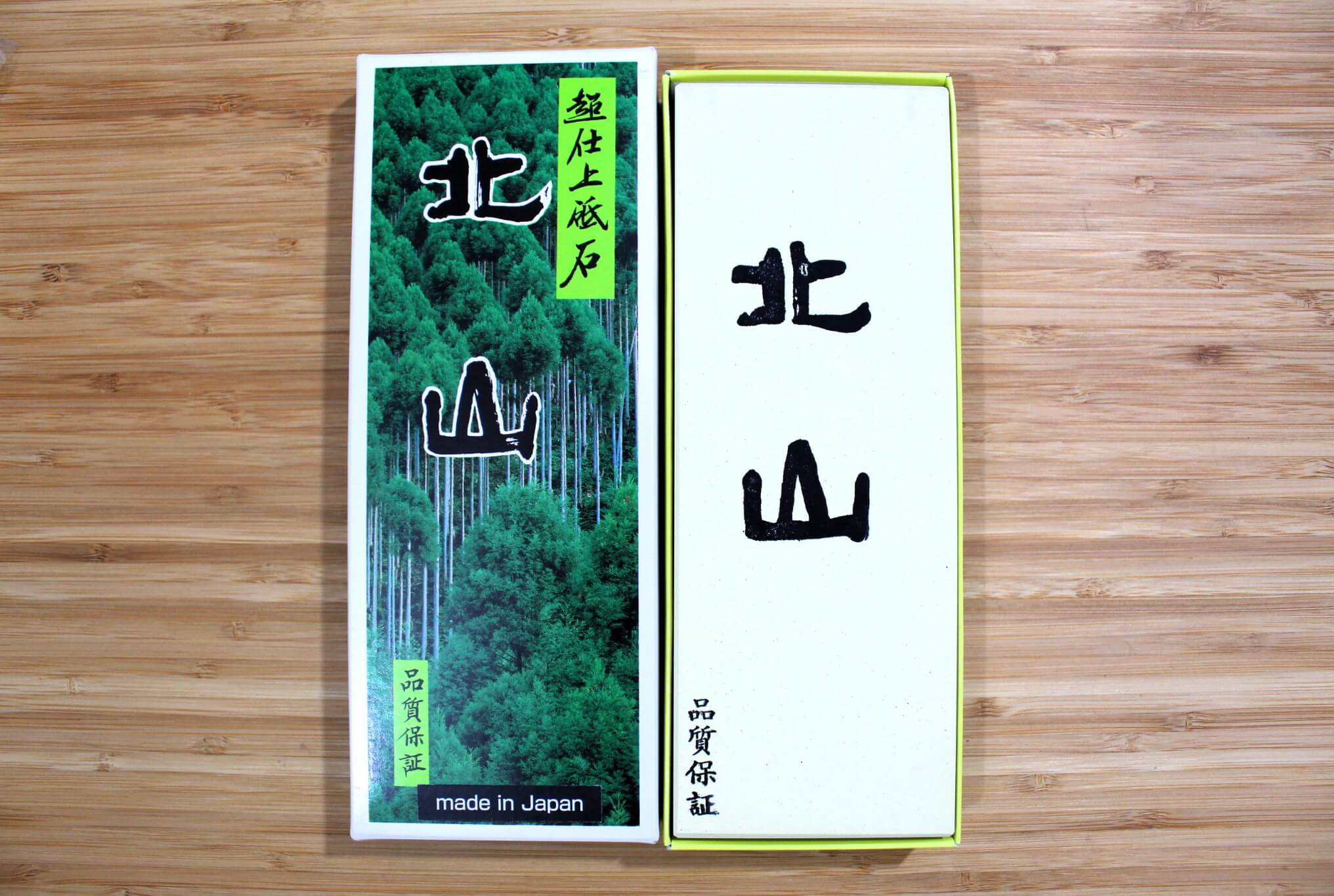
- Kyokokaji Shokei Presentation Box: Traditional Japanese box for protective storage or gifting.
- Protective Edge Sleeve: Guards the hand-honed cutting apex during unboxing and transit.
Authorized Dealer Direct
Hasu-Seizo direct-sources authentic Japanese cutlery from traditional makers across Japan. Prior to dispatch, every knife is individually inspected at our Seattle area warehouse to verify edge straightness, bevel symmetry, and tight rattan wrapping along the handle.
Sharpening & Care Guidelines
- Whetstone Maintenance: The combination of soft iron cladding and Shirogami #2 core sharpens rapidly and cleanly on Japanese whetstones. Maintain the edge using a medium whetstone (#1000 grit) to set the bevel, followed by a fine finishing whetstone (#5000 to #8000 grit) and leather stropping for a polished apex.
- Cutting Technique: Built for precision in-hand peeling, coring, trimming, and light board detail cuts. Avoid twisting or prying laterally against hard pits.
- Prohibited Uses: Do not cut through bones, frozen foods, hard fruit stones, or shells; hacking hard targets will cause the thin edge to chip.
Frequently Asked Questions
Why is Shirogami #2 clad in soft iron instead of stainless steel? Traditional Japanese soft-iron cladding (jigane) absorbs lateral shock to protect the brittle 61–63 HRC Shirogami #2 core, while abrading much faster on whetstones for effortless sharpening and blade thinning.
Will both the iron cladding and Shirogami #2 core rust? Yes. Because both the soft iron cladding and White Steel #2 core are reactive, the exposed bevels will develop a protective blue-gray patina with use and must be wiped dry immediately after washing.
What does "Shironiko" mean in Japanese knives?Shironiko (白二鋼) is the Japanese metallurgical term for Shirogami #2 (White Steel #2), a pure, unalloyed high-carbon steel prized for taking a razor-sharp edge and sharpening effortlessly on whetstones.
Why does an 80 mm paring knife have a 3 mm spine? A 3 mm spine near the handle eliminates blade flex during tough paring, coring, and trimming tasks, while tapering down to a thin edge for clean slicing.
What is a Fujimaki handle? A Fujimaki handle is wrapped in traditional Japanese rattan, providing a textured, water-resistant, non-slip grip that stays secure during wet fruit and vegetable prep.
Where does this knife ship from? All inventory is inspected, packaged, and shipped directly from our warehouse located in the Seattle area.
Choose options
Hasu-Seizo is a family-owned and operated business proudly offering handcrafted Japanese knives to chefs of all levels in the U.S. and beyond. Originally from Osaka, our family is the makers of the renowned Sakai Takayuki brand, carrying forward the rich traditions of Japanese knife-making. Rooted in generations of craftsmanship and dedication, we honor this legacy with every blade we create.