




Sawakazuma SRS13 Laser Gyuto 180 mm (7.1") / 210 mm ( 8.2") – Rosewood Handle
Uncompromising Cutting Dynamics for the Discerning Station
The Sawakazuma SRS13 Gyuto 210 mm is built strictly for high-level professional chefs and experienced culinary purists who demand surgical cutting geometry. In high-tempo line work and serious prep kitchens, blade thickness is the primary determinant of cutting resistance. Ground to an extraordinary 1 mm spine, this knife operates in the rarest tier of Japanese cutlery: a true "laser" grind that eliminates the physical friction and lateral displacement found in conventional chef knives.
With an authentic 210 mm (8.2") cutting edge and balanced Wa-ergonomics, it offers absolute tip control for horizontal shallot dicing, precise silverskin trimming, and flawless single-stroke protein push-cuts.
SRS13 Powder Metallurgy Core: 63–64 HRC
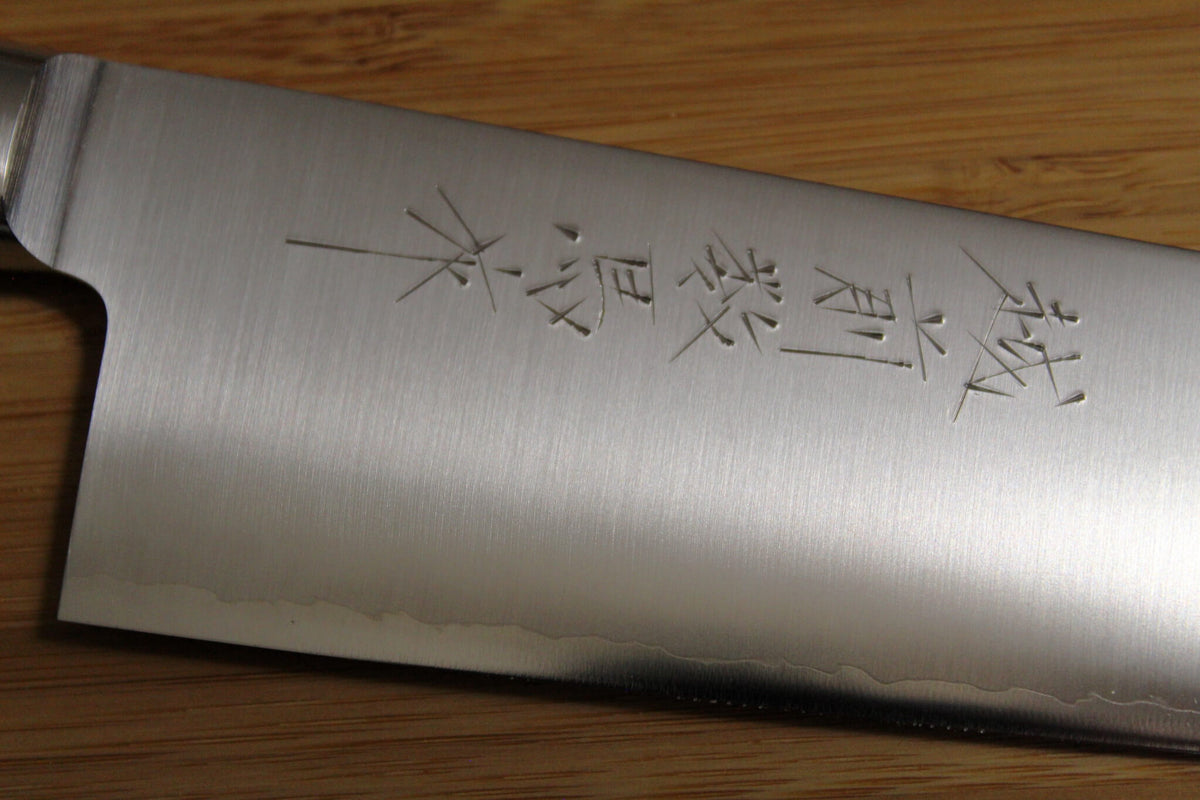
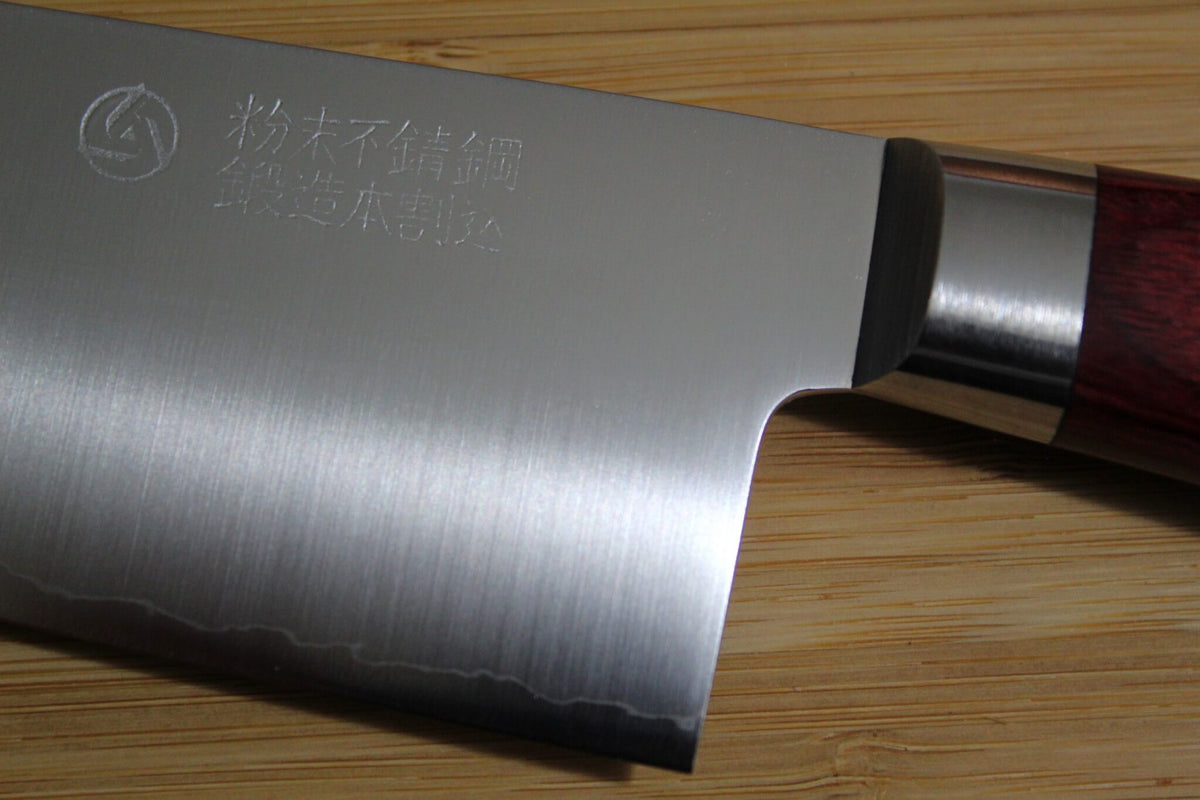
At the heart of the blade is SRS13 Powder Metallurgy High-Speed Tool Steel, hardened to an uncompromising 63–64 HRC. Manufactured via rapid gas-atomization, SRS13 possesses an exceptionally uniform carbide distribution that conventional ingot-cast steels cannot replicate.
- Extreme Wear Resistance: The dense tungsten, molybdenum, and vanadium carbide matrix holds a razor apex through punishing commercial prep shifts, resisting dulling far beyond conventional VG-10 or standard high-carbon alloys.
- Full Stainless Integrity: Despite performing with the crisp cutting feedback and tooth of high-purity carbon steel, SRS13 provides complete corrosion and acid resistance, withstanding continuous contact with citrus, shallots, and high-acid ingredients.
Why an Ultra-Thin 1 mm Laser Profile Commands a Premium
Chefs often ask why a knife with less physical mass commands a significantly higher price than thicker, heavier kitchen knives. The answer lies in the unforgiving manufacturing tolerances required to forge and grind high-hardness powdered steel:
- High-Stress Grinding & Heat Management: Grinding hardened 63–64 HRC powdered metallurgy steel down to a 1 mm profile is a slow, exacting hand process. Unlike thicker, mass-manufactured blades that can be rapidly shaped on industrial dry wheels, an ultra-thin blade overheats instantly. Master grinders must shape the blade by hand on low-speed, water-cooled whetstones, constantly checking blade tension. A single second of excessive heat will ruin the steel's temper, destroying the blade.
- Extreme Warping & Quench Attrition: Heat-treating a high-alloy steel to 63–64 HRC creates immense internal stress. At a standard 3 mm to 4 mm thickness, a blade has the structural mass to resist warping during oil or cryogenic quenching. At just 1 mm, the risk of warping, twisting, or micro-fracturing skyrockets. Producing a dead-straight, 1 mm powdered steel blade results in a dramatically higher scrap rate at the forge, requiring master-level smiths to hand-straighten and temper each piece.
- Zero-Wedging Cutting Physics: Thicker knives (even those with sharp apexes) wedge, split, and crack dense ingredients like heirloom carrots, daikon, and sweet potatoes due to their shoulder thickness. A 1 mm laser spine displaces virtually no material as it moves through food, dropping through cell walls with near-zero resistance and preserving delicate food textures without bruising.
Rosewood Ergonomics
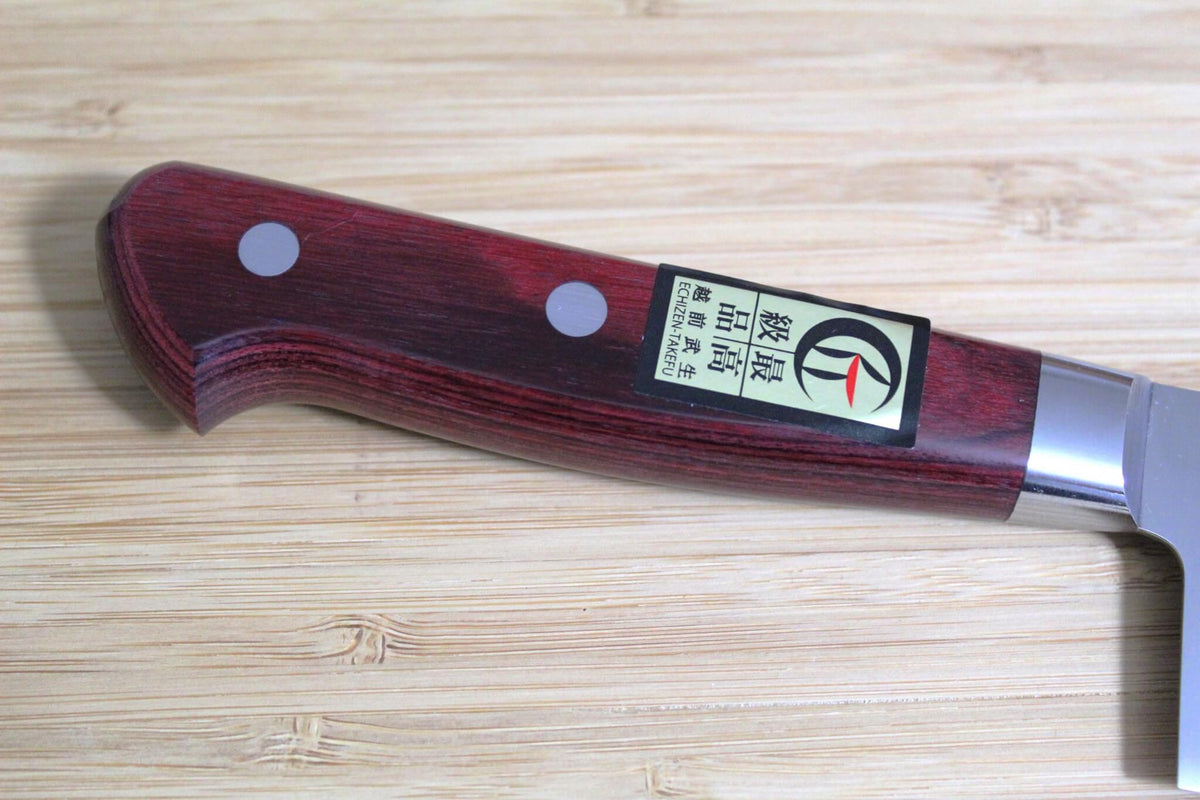
The blade is mounted to a natural Rosewood handle. Dense, structurally stable, and naturally oily, rosewood provides superior water resistance and a tactile grip that will not degrade under heavy kitchen sanitization routines. The ambidextrous profile provides neutral, fatigue-free control for both pinch-grip push cutting and delicate detail work.
Technical Specifications
|
Specification |
Details |
|
Brand / Maker |
Sawakazuma |
|
Knife Type |
Gyuto (Multi-Purpose Chef's Knife) |
|
Core Blade Steel |
SRS13 Powder Metallurgy High-Speed Tool Steel |
|
Blade Construction |
Stainless Clad / SRS13 Powder Steel Core |
|
Hardness |
63–64 HRC |
|
Blade Thickness |
1 mm (Ultra-Thin Laser Grind) |
|
Blade Length |
210 mm (8.2") |
|
Edge Bevel |
Symmetrical Double Bevel (50/50) |
|
Handle Material |
Natural Rosewood |
|
Target User |
Professional Chefs & Experienced Home Cooks |
What’s in the Box?
- Sawakazuma Presentation Box: Traditional Japanese presentation packaging for protective storage.
- Protective Edge Sleeve: Heavy-duty blade guard securing the 1 mm apex during transit and unboxing.
Authorized Dealer Inspection
Hasu-Seizo directly sources authentic Japanese cutlery from master makers. Because ultra-thin laser knives require zero tolerance for warping, every Sawakazuma SRS13 Gyuto is individually inspected on a granite surface plate at our Seattle area warehouse to verify absolute straightness along the 1 mm spine, perfect bevel symmetry, and flawless handle mounting before dispatch.
Sharpening & Maintenance
- Whetstone Maintenance: At 63–64 HRC, SRS13 is remarkably wear-resistant. To maintain its surgical apex, we recommend using high-quality Japanese whetstones. Start with a medium whetstone (#1000 to #2000 grit) to establish edge bite, followed by a fine whetstone (#5000 to #8000 grit) and leather stropping for a polished, frictionless edge.
- Cutting Technique: This knife is a surgical slicer, not a chopper. Use fluid push, pull, or glide cuts. Avoid aggressive twisting, lateral torque, or scraping the blade edge sideways against the cutting board.
- Board Selection: Pair exclusively with premium end-grain wood (walnut, cherry, maple) or high-grade synthetic soft rubber boards (Asahi, Hasegawa). Never use bamboo, glass, marble, or composite boards.
- Restrictions: Do not cut through bones, frozen foods, dense cheese rinds, or hard pits. Hand-wash with warm water and mild soap, then towel dry immediately. Never clean in a dishwasher.
Frequently Asked Questions
Why is a 1 mm laser knife more expensive than a thicker forged knife? Grinding 63–64 HRC powdered steel to a 1 mm thickness requires low-speed hand-grinding to avoid ruining the temper, and heat-treating thin stock carries a much higher forge failure rate, demanding master-level craftsmanship.
What are the performance benefits of SRS13 powder steel? SRS13 offers exceptional wear resistance and holds a keen edge far longer than standard stainless steels, while providing complete stain resistance and the smooth whetstone feedback of high-carbon steel.
Can I use a honing steel on an SRS13 blade at 63–64 HRC? No. Never use standard grooved steel honing rods on a 63–64 HRC laser blade, as they can chip the ultra-thin apex. Use fine whetstones or a smooth leather strop for edge realignment.
Where does this knife ship from? All knives are inspected, stored, and shipped directly from our warehouse located in the Seattle area.
Choose options
Hasu-Seizo is a family-owned and operated business proudly offering handcrafted Japanese knives to chefs of all levels in the U.S. and beyond. Originally from Osaka, we are the makers of the renowned Sakai Takayuki brand, carrying forward the rich traditions of Japanese knife-making. Rooted in generations of craftsmanship and dedication, we honor this legacy with every blade we create.