
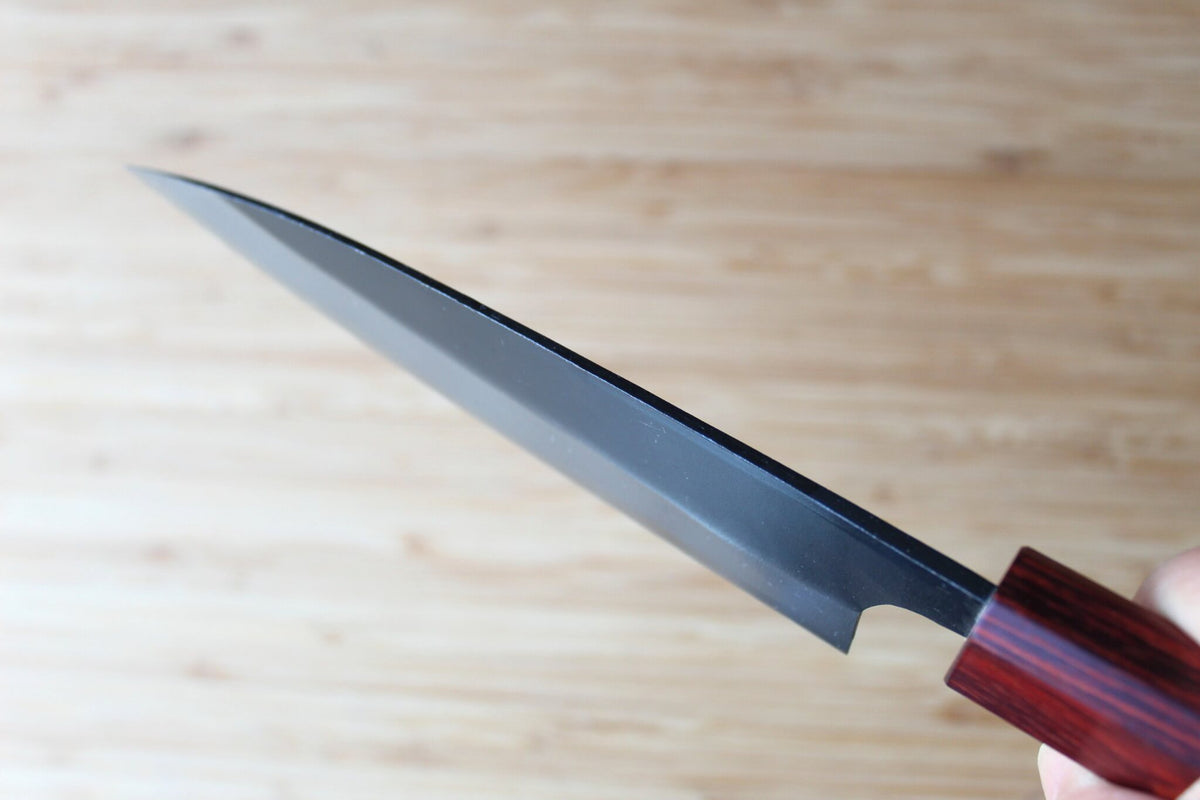
Sawakazuma Small Santoku Knife 140mm (5.5") – White Steel #2, Maple & Renghas Handle
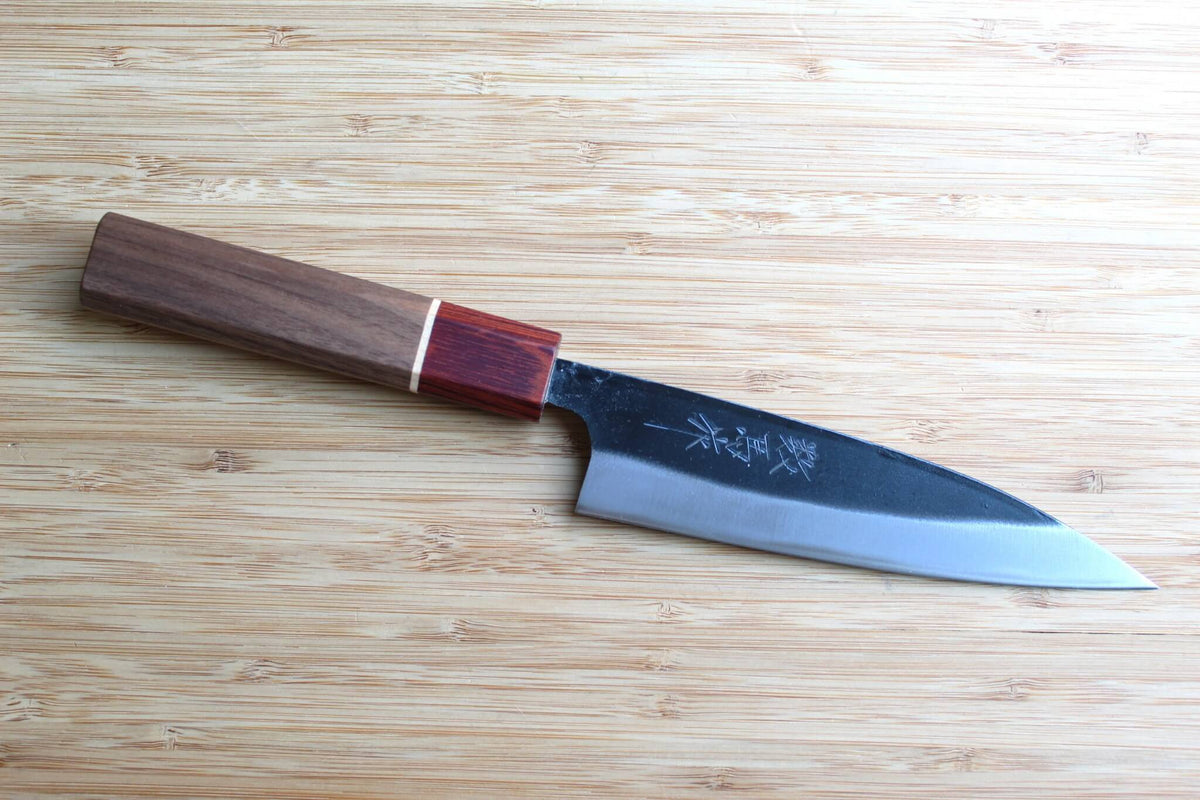
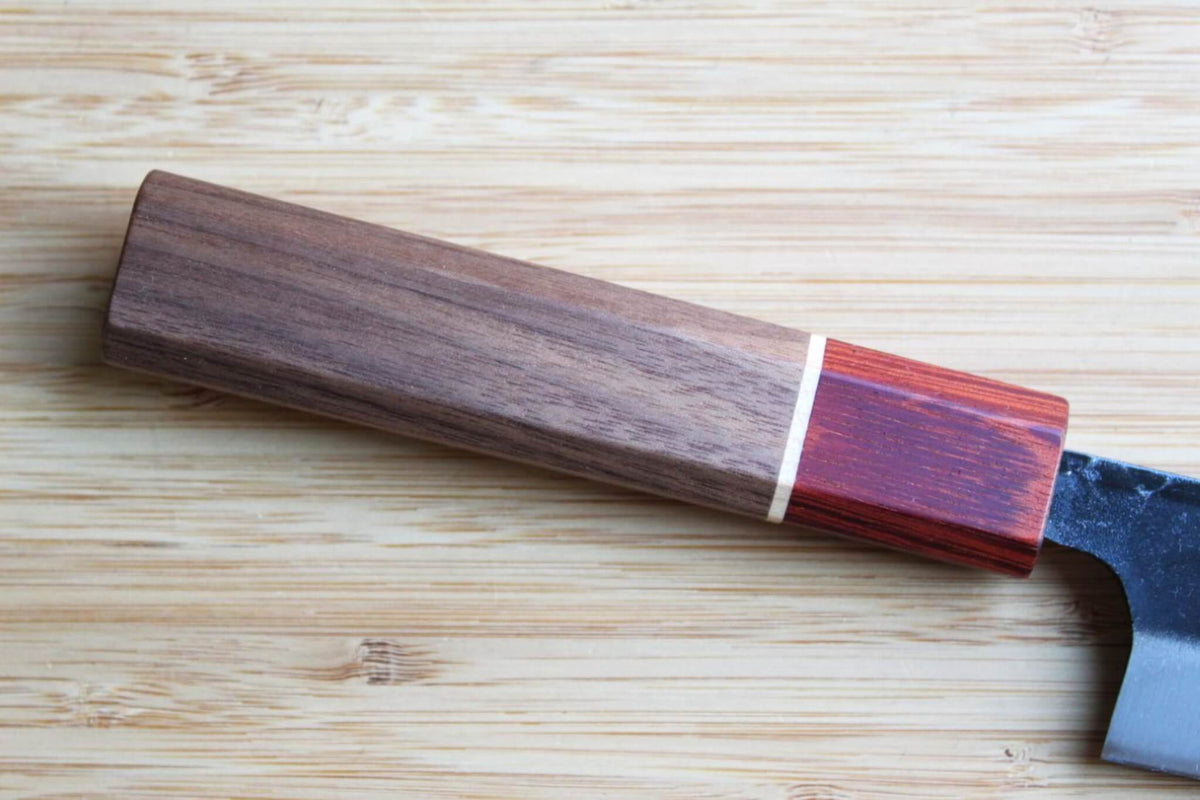
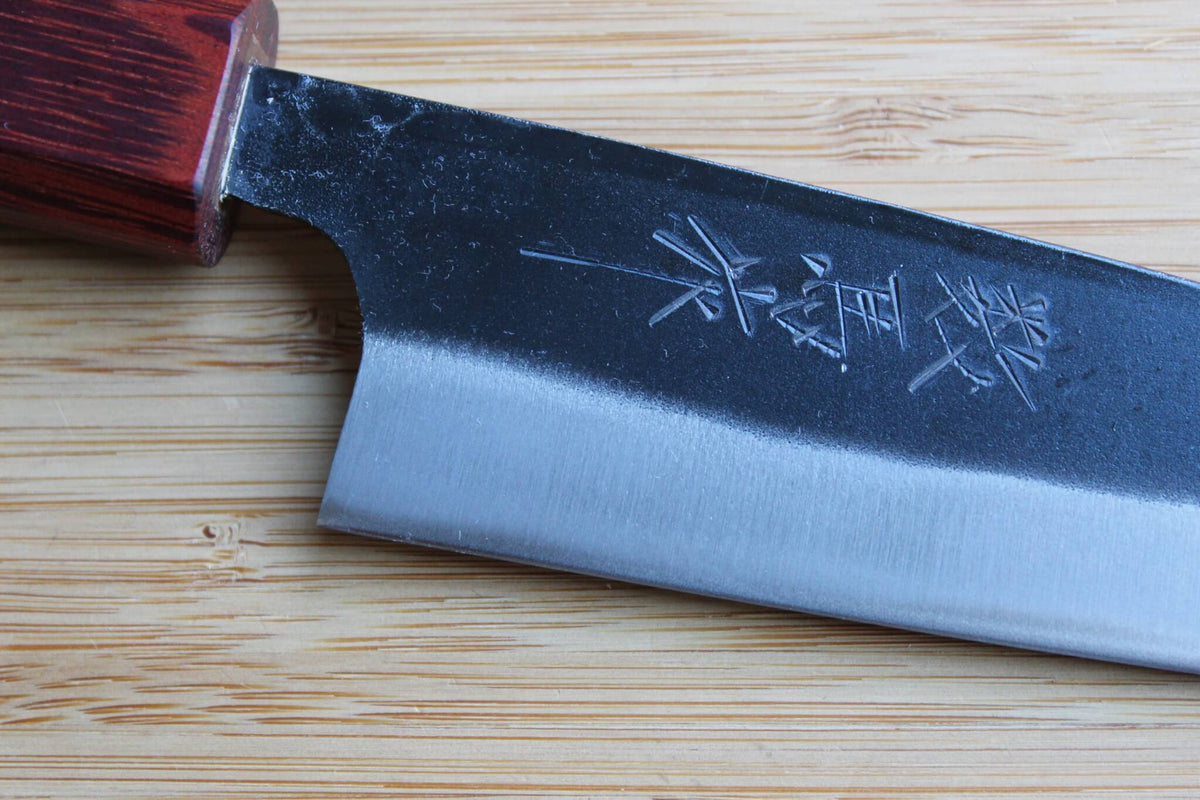
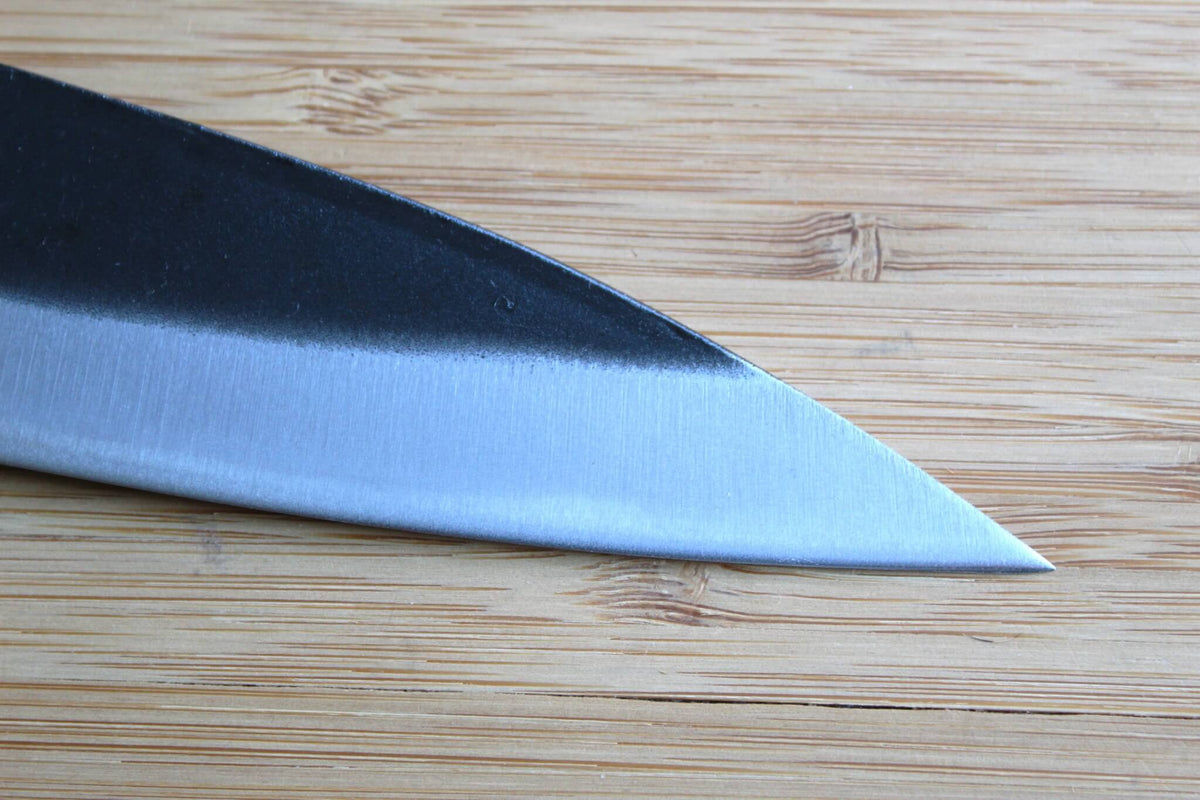
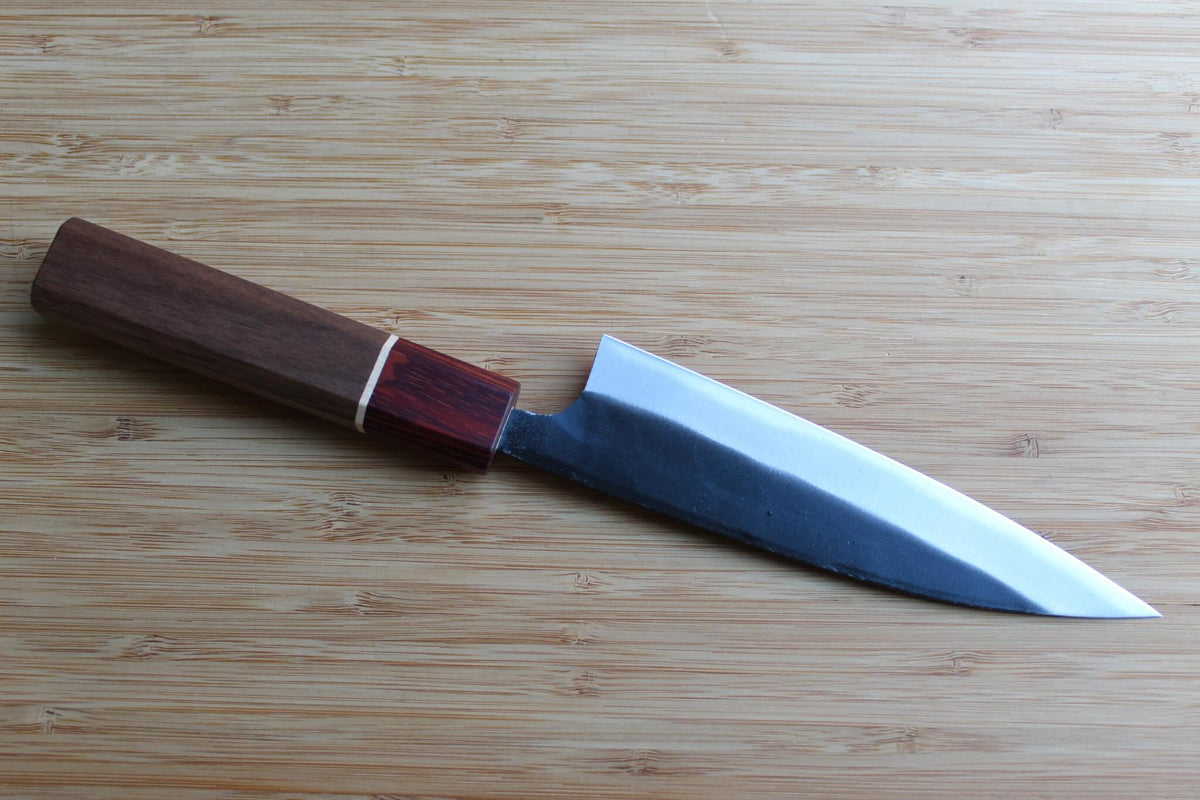
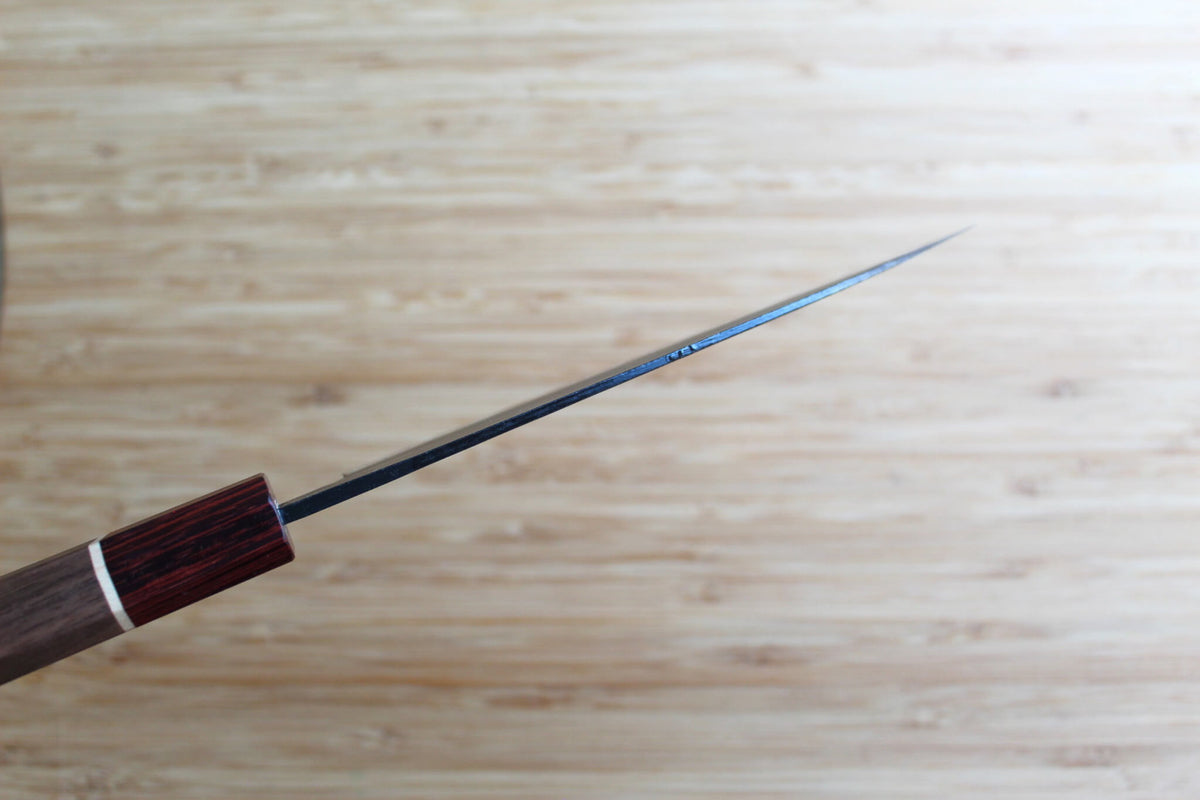
The Sawakazuma Small Santoku 140mm (Ko-Santoku) is an authentic, handcrafted Japanese kitchen knife engineered for high precision and nimble prep work. Forged from high-purity White Steel #2 (Shirogami #2 / Shironiko) and fitted with a dual-tone Maple & Renghas wood handle, this knife bridges the gap between a utility knife (Petty) and a standard kitchen knife. Its compact 140 mm profile and thin blade geometry provide agile control when slicing root vegetables, mincing shallots, trimming boneless proteins, and peeling fruit.
Technical Specifications
|
Specification |
Parameter |
|
Brand |
Sawakazuma |
|
Knife Type |
Small Santoku / Ko-Santoku |
|
Blade Steel |
White Steel #2 (Shironiko / Shirogami #2) |
|
Blade Length |
140 mm (5.5") |
|
Weight |
82 g |
|
Blade Width |
35 mm |
|
Blade Thickness |
1 mm |
|
Handle Length |
113 mm |
|
Handle Thickness |
24 mm |
|
Handle Material |
Natural Maple & Renghas Wood |
|
Edge Type |
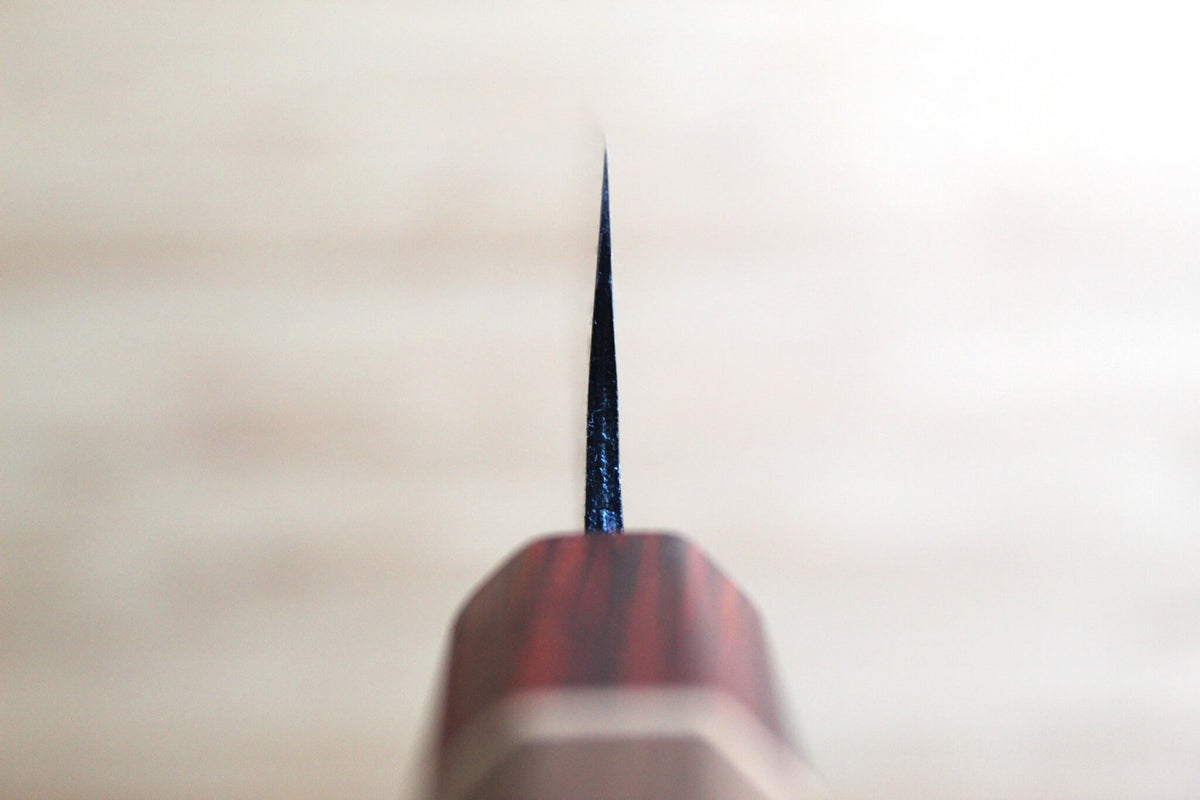
50/50 Double Bevel |
|
Primary Uses |
Vegetables, herbs, boneless meats, precision slicing |
Key Performance Features
- Traditional White Steel #2 (Shirogami #2): High-purity carbon steel renowned among traditional Japanese blacksmiths for taking an exceptionally keen edge and offering effortless feedback on water stones.
- Agile 140 mm Ko-Santoku Profile: A compact flat-to-curved edge belly delivers the multi-purpose utility of a classic Santoku while offering greater maneuverability on smaller cutting boards.
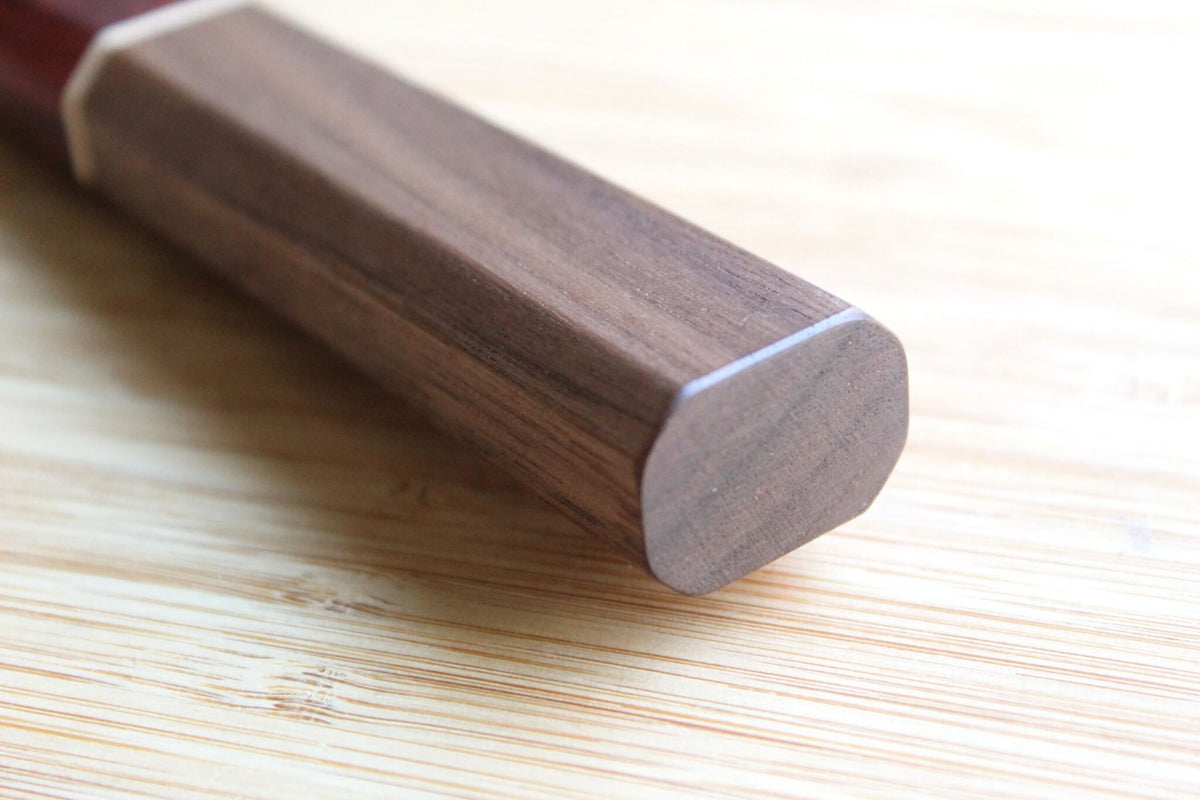
- Ergonomic Maple & Renghas Wood Handle: Blends light natural maple with dense, moisture-resistant renghas accents for balanced weight distribution and a secure, fatigue-free pinch grip.
- Artisanal Japanese Forging: Handcrafted in Japan to optimize blade balance, edge geometry, and tactile feedback for home gourmets and professional kitchens alike.
Care & Carbon Steel Maintenance
Carbon Steel Notice: White Steel #2 is a pure, reactive high-carbon steel and is not stainless. It will oxidize and form a protective patina through contact with acidic foods and moisture.
- Immediate Cleaning: Hand wash with mild dish soap and warm water immediately after each cutting session. Never clean in a dishwasher.
- Thorough Drying: Dry completely with a clean towel immediately after washing. Store only when completely moisture-free.
- Corrosion Protection: If storing the knife for extended periods or in humid environments, apply a thin coat of food-grade camellia oil (Tsubaki) to both sides of the blade.
- Whetstone Sharpening: Maintain the edge using standard water whetstones (e.g., #1000 grit medium stone for periodic edge setting followed by a fine #3000 to #6000 grit stone for edge refinement). Avoid pull-through carbide sharpeners.
Frequently Asked Questions
What is a 140mm Small Santoku (Ko-Santoku) best used for?
A 140mm Small Santoku—often called a Ko-Santoku—bridges the gap between a standard 165–180mm chef’s knife and a small utility (Petty) knife. Its compact length and wide blade face provide knuckle clearance for board work while offering agile control. It excels at quick, high-precision prep work: mincing shallots and garlic, dicing chilies, slicing fruit, and trimming boneless meats on compact cutting boards.
Will White Steel #2 rust, and how do I prevent corrosion?
Yes. White Steel #2 (Shirogami #2) is a pure high-carbon Japanese steel and is not stainless. It will react to moisture and acidic ingredients, developing a natural, protective gray-blue patina over time. To prevent orange rust, wash the knife by hand with warm water and mild soap immediately after use, dry it thoroughly with a towel, and never leave it damp or run it through a dishwasher. For storage in humid environments, wipe the clean blade with a drop of food-grade camellia (tsubaki) oil.
How should I sharpen the Sawakazuma White Steel #2 blade?
White Steel #2 has minimal alloy impurities, making it one of the most responsive steels to sharpen on traditional Japanese water whetstones. For routine maintenance, use a #1000 grit whetstone to reset the cutting edge, followed by a #4000 to #6000 grit finishing stone to refine and polish the bevel. Avoid honing steels or mechanical pull-through sharpeners, as high-hardness Japanese carbon edges can chip against uneven abrasive surfaces.
How does purchasing and fulfillment work through Hasu-Seizo in the Seattle area?
Hasu-Seizo operates directly out of the greater Seattle area, curating and importing authentic, artisan-made Japanese cutlery directly from traditional blacksmith workshops in Japan. Orders placed through Hasu-Seizo ship locally from the Pacific Northwest, providing fast regional delivery across Washington State and standard domestic shipping nationwide.
Choose options


Hasu-Seizo is a family-owned and operated business proudly offering handcrafted Japanese knives to chefs of all levels in the U.S. and beyond. Originally from Osaka, we are the makers of the renowned Sakai Takayuki brand, carrying forward the rich traditions of Japanese knife-making. Rooted in generations of craftsmanship and dedication, we honor this legacy with every blade we create.